

Whenever I talk to someone one-on-one about Wealthramp, the business I created to match people with vetted, fee-only, fiduciary financial advisors, I hear some version of the same thing: “Pam, I can’t believe how passionate you are about this.” But once I explain how the financial services industry really works, the reaction is more like: “Wait. I’ve trusted someone with my life savings for years, and I never knew how to tell if the advice was even real, let alone how much it was costing me?”
I care about that moment because it’s when the lightbulb goes on and you understand what good financial advice is supposed to look like. You can’t look at that relationship the same way again.
I’m sharing my backstory because there’s a pretty straight line from what I saw early in my career, to creating the weekly MoneyTrack TV series seen on PBS stations nationally, to eventually building Wealthramp.
Something I Couldn’t Unsee
Early in my career, I was smack in the middle of the aggressive sales culture that rules the brokerage industry. Some of the broker-advisors I managed were good people but already settled into a really bad system. They were trained enough to “sell” whatever the brokerage firm made commissions on, but not qualified to give financial advice – let alone offer tax planning or investment strategy.
The moment that changed my career was when I watched two advisors I managed push annuities onto a cognitively impaired man in his late 80s, then celebrate the big commissions they earned. And I was supposed to defend that behavior. I thought, “Oh no, what have I done?” And I remember thinking: this can’t be real, there has to be real financial advice out there.
MoneyTrack Changed Everything for Me
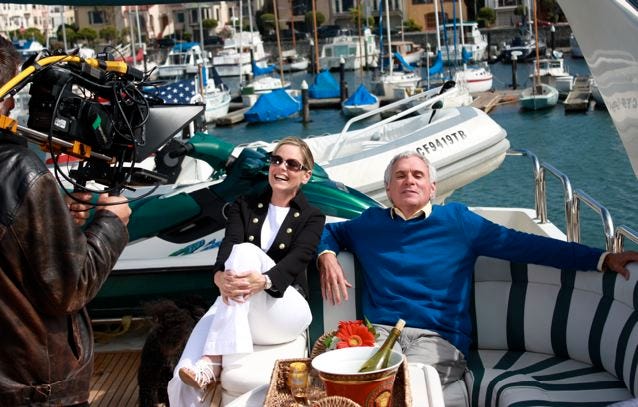
My next role gave me an insider’s look at how real advisors operate. These are independent advisors. When an advisor wasn’t selling a particular product where you are paying a big commission, I saw the difference. I met with thousands of highly qualified fiduciary, fee-only financial advisors and learned that there’s a lot more to becoming an exceptional financial advisor, and fee-only and fiduciary don’t always make somebody exceptional.
Fast forward to 2005. I decided to create the weekly MoneyTrack TV series to educate Americans about how to save, manage and invest better. We aired for three seasons on more than 250 PBS stations. I wanted a big audience to get realistic financial education but not turn it into a boring business show about Wall Street. It had to be personal finance. We featured real people, respected experts and a good dose of humor. My Labradoodle, Chloe, was running around on set. MoneyTrack became a huge part of my life and my story, and I’m proud to say I won two prestigious Gracie Awards.
And because that mission resonated with legendary investing experts like John Bogle, Jeremy Siegel, Ben Stein and, yes, Warren Buffett, they all agreed to appear on MoneyTrack. In fact, John Bogle became a regular guest, and I later interviewed him for the one-hour special An Evening with John Bogle where he explained the financial crisis of 2008.
Together, our message was consistent: people deserve better advice, not sales for insurance. They need full transparency. The fact is there are simply too few truly outstanding fee-only financial advisors. In my opinion, there are only about 5,000 financial advisors in America who I can call exceptional fiduciaries. That’s out of more than 350,000 financial advisors, including the brokers and insurance agents who call themselves advisors.
And that’s where MoneyTrack eventually turned into Wealthramp.
MoneyTrack could teach you what to look for, what questions to ask and how to protect yourself. But viewers kept telling me: the show couldn’t say which advisor to trust.
Even if I taught you every right vetting question to ask, how were you supposed to know who was actually great at what they did? And who would really understand you, instead of fitting you into the same system they use for everybody else?
So along came Wealthramp.
Most People Don’t Know What They’re Missing
Thanks to an industry built entirely around sales and marketing instead of financial advice, most people have never experienced truly outstanding financial advice. They don’t even know what it looks like.
Great advice goes much deeper than managing money because a great advisor understands what the money is supposed to do for you, what scares you, what matters to you, where you can afford to take risk and where you absolutely cannot. Two people with exactly the same amount of money can need completely different advice because they have completely different lives.
That’s why one-size-fits-all financial advice drives me crazy. One product can’t possibly know you. The best model portfolio still can’t know you. And a free oline retirement calculator looking at your age and account balance can’t know you.
The best advisors I’ve met start by listening to you. Sometimes great advice means telling someone to spend less. Sometimes it means telling someone who has spent a lifetime saving that they can finally spend more.
Why I Personally Vet Every Wealthramp Advisor
People sometimes ask why I’m so involved in the vetting. Why not screen for credentials, experience, fee-only status and a clean regulatory record and leave it at that?
Because that’s not enough for me. I want their backstory. Why did this person become an advisor? How do they actually work with clients? What happens when a client is scared, grieving or about to make a decision the advisor thinks is a mistake?
I’m listening for what doesn’t show up on a résumé. What would it actually feel like to work with this person? Will they really listen? Will they notice the details? Will they be there when life changes and the original plan no longer fits?
Ultimately, I’m asking one question: would I trust this advisor with someone I care about? If the answer isn’t an emphatic yes, they don’t belong in Wealthramp. After all, my name is on every advisor recommendation so it’s like someone’s hiring me directly.
This Is Why It’s So Personal
At this point in my own life, I understand what it feels like when the runway isn’t endless anymore. Life changes, decisions have consequences, and what mattered at 45 can look very different later.
I think everybody deserves an advisor who understands that—especially people who have worked for decades, saved diligently and built a good life, but not so much that a major mistake doesn’t matter. That’s who I’m thinking about when I interview an advisor.
I can’t make the entire financial services industry behave the way we all wish they would. But I can do my small part: help people understand what great financial advice should look and feel like, and find advisors who meet the standard I would want for myself and for the people I love.
And that’s how an educational TV series called MoneyTrack became Wealthramp. The mission never changed. It’s to help people understand what good financial advice really looks like, and make sure they can actually find it.
P.S. I’ve just created a new series, “Decoding Financial Advisors,” on YouTube. In every episode, I’ll explore different aspects of selecting the right financial advisor to meet your needs. I’d love for you to check out the first episode here and let me know what you think.